

Artificial intelligence has become part of the job search process.
Candidates are using tools like ChatGPT to improve CVs, tailor applications, prepare for interviews, and even help with cover letters. In many ways, it is no different from using spellcheck, Grammarly, or asking a friend to review your CV before sending it.
Yet one question keeps coming up:
Can recruiters tell if you used AI to write your CV?
The honest answer is that sometimes they can.
But that is probably the wrong question to ask.
Most recruiters are not trying to catch candidates using AI. They are far more interested in whether a CV accurately reflects the person behind it. In fact, many recruiters see AI as a useful tool when it is used in the right way.
The real question is this:
Are you using AI to improve your CV, or are you letting it write your CV for you?
That difference matters.
Recruiters Are Not Against AI
There is a common belief that recruiters automatically dislike AI-generated CVs.
That is not really true.
Most recruiters understand that technology is changing how people apply for jobs. Many businesses are encouraging employees to use AI tools in their day-to-day work, so it would be strange to expect candidates not to use them during their job search.
The issue is not AI itself.
The issue is authenticity.
A CV should tell your story. It should explain what you have done, what you have achieved, and what value you could bring to a future employer.
AI can help you tell that story more clearly.
It cannot create the story for you.
Where AI Can Be Really Helpful
For many candidates, writing about themselves is surprisingly difficult.
You know your experience inside out, but turning years of work into a clear and concise CV can be challenging.
This is where AI can be incredibly useful.
It can help improve grammar, tighten up wording, remove repetition, and make achievements easier to understand. It can also help tailor a CV towards a specific role by highlighting relevant experience that might otherwise get overlooked.
Think of AI as a collaborator.
You provide the experience. AI helps you communicate it.
That approach often produces far stronger results than either a candidate or AI could achieve alone.
Where Candidates Get Into Trouble
Problems tend to appear when candidates hand over the entire process.
Most AI tools are trained to produce professional-sounding content. The result is often polished, but it can also be vague.
You end up with sentences that sound impressive without actually saying very much.
For example:
“A results-driven professional with a proven track record of delivering strategic initiatives and driving business success.”
It sounds professional.
But what does it actually tell a recruiter?
Very little.
Now compare that with:
“Managed a website migration project that increased organic traffic by 42% within six months.”
The second example immediately gives context, evidence, and credibility.
Recruiters are naturally drawn to specifics because specifics feel real.
The more a CV relies on generic AI language, the harder it becomes for a candidate to stand out.
Can Recruiters Spot AI-Written CVs?
Sometimes.
Not because they are running applications through detection software, but because patterns start to emerge.
Recruiters review hundreds of CVs. After a while, they become familiar with certain phrases and writing styles that frequently appear in AI-generated content.
What often stands out is not that the writing is bad.
It is that everything sounds a little too polished and a little too generic at the same time.
The strongest CVs tend to have personality. They include details, achievements, challenges, and outcomes that are unique to the individual.
AI can help shape those details.
It struggles when there are no real details to work with.
Recruiter Insight
David Berwick, Director at Adria Solutions, believes candidates should embrace AI, but use it wisely.
“AI can be a brilliant tool for job seekers. The candidates who get the most value from it are usually the ones who use it to improve what they have already written rather than asking it to create everything from scratch. The best CVs still sound like a real person. They include genuine achievements, real examples, and enough detail to make someone memorable.”
That reflects what many recruiters are seeing across the market.
The issue is rarely whether AI was involved.
The issue is whether the final CV still feels authentic.
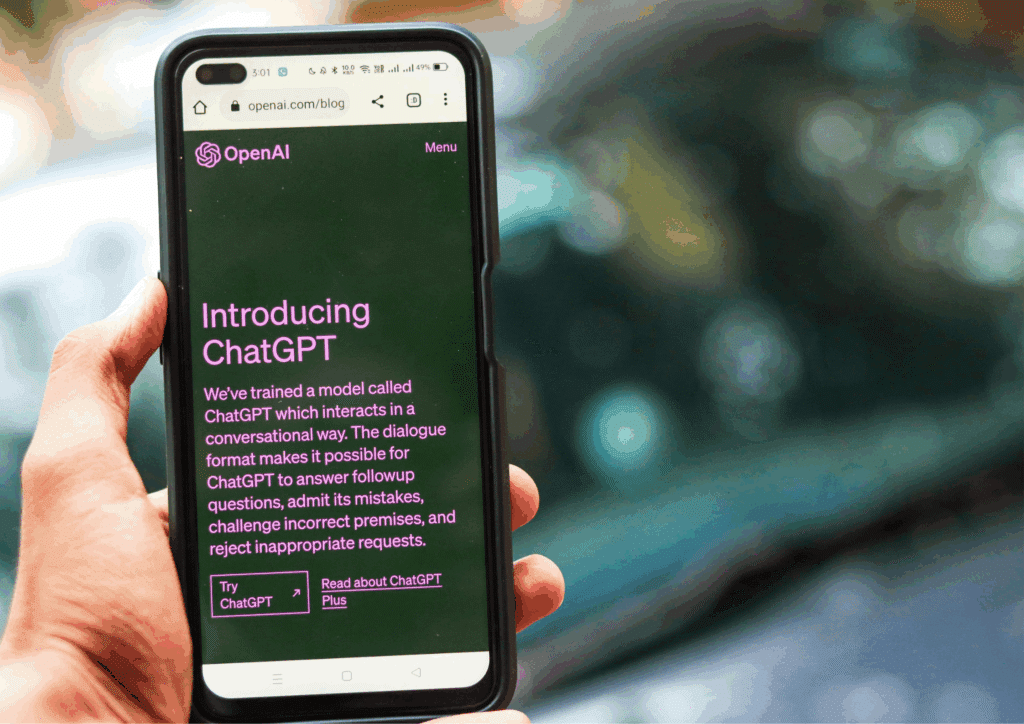
The Best Approach: Human First, AI Second
The strongest CVs in 2026 are unlikely to be entirely human-written or entirely AI-written.
They will be a combination of both.
Start with your own experiences, achievements, and career history.
Write down what you actually did.
What projects did you work on?
What problems did you solve?
What impact did you have?
Then use AI to improve the structure, refine the wording, and make your achievements easier to understand.
That process keeps the content authentic while benefiting from the speed and efficiency AI can provide.
So, Can Recruiters Tell If You Used AI?
Sometimes.
But in most cases, they do not care.
What recruiters care about is whether your CV accurately represents who you are and what you can do.
Used well, AI can help candidates create clearer, stronger, and more effective CVs.
Used badly, it can make every application sound exactly the same.
The candidates who will benefit most from AI are not the ones who let it take over.
They are the ones who treat it as a collaborative assistant, using it to sharpen their message while keeping their own experience, achievements, and personality at the centre of the story.

Jazz Thomson
Digital Marketing Manager
Find the right fit for you
We provide friendly, forward-thinking, 360° recruitment solutions. With two decades of experience in the tech sector, we focus on happy hiring.
Get the latest news, talent insights and trends
-

How To Calm Interview Nerves
After spending hours crafting the perfect CV and pouring over job boards, your hard work has finally paid off! The hiring manager from a company you really want to work… -

Software Engineering Skills: What Employers Are Looking for in 2026
Software engineering skills are evolving quickly. New frameworks appear, cloud platforms expand, and AI tools reshape the way development teams work. For both candidates and hiring managers, understanding which skills… -

Why Making a Career Switch to Tech in 2024 is a Smart Move
Making a career switch to tech seems a wise decision, considering the high demand for tech skills, the tech sector’s resilience to economic fluctuations, the continuous innovation of the sector,…